
Operation Tannenberg (Unternehmen Tannenberg / Operacja Tannenberg)
Operation Tannenberg (Unternehmen Tannenberg / Operacja Tannenberg)
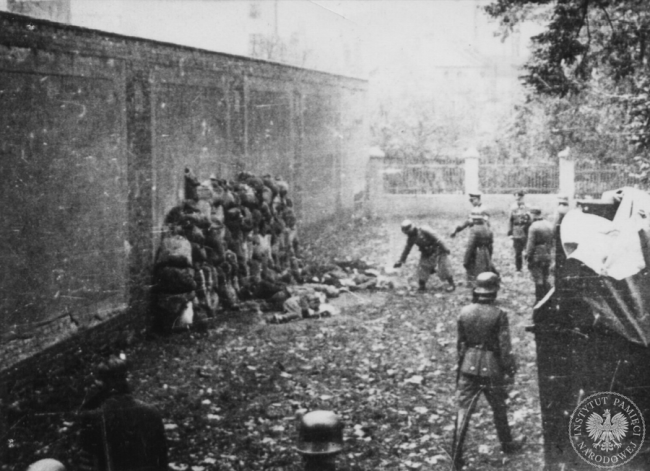
Operation Tannenberg was the code name for a mass extermination campaign carried out by Nazi Germany against the Polish elite in occupied Polish territories from September to November 1939. It was conducted by the Einsatzgruppen (operational groups) of the Security Police (SiPo) and the Security Service (SD). It was the first large-scale, pre-planned extermination operation of the Second World War. Its aim was the physical elimination of the Polish leadership class — the intelligentsia, clergy, teachers, political and social activists, officials, landowners, and veterans of uprisings — in order to prevent resistance and facilitate the Germanization of Polish lands. The operation took place under the cover of the Wehrmacht’s military campaign and formed part of the broader policy of destroying the Polish nation as a political and cultural entity.
PreparationPlanning began before the outbreak of war. On 18 May 1939, Reinhard Heydrich presented Heinrich Himmler with the first guidelines for the use of the SiPo and SD in the planned war against Poland. In Berlin, the Central Office II P (Poland) was established, which compiled card indexes and proscription lists (Sonderfahndungsbuch Polen / Sonderfahndungsliste). The card indexes contained approximately 61,000 names, while the printed “Special Wanted Book for Poland” listed about 8–9,000. The lists were based on materials from the Gestapo, SD, Abwehr, and reports from local Volksdeutsche. Adolf Hitler personally approved the operation, as he did not trust the Wehrmacht generals to carry out the liquidation of the Polish elite and assigned the task to forces under Himmler’s command.
Leadership and Participants- Political and overall leadership: Adolf Hitler (initiator), Heinrich Himmler (Reichsführer-SS), Reinhard Heydrich (chief of the SiPo and SD, direct planning within the RSHA).
- Operational leadership: Special department “Unternehmen Tannenberg” in the Main Office of the Security Police; on the ground, the commanders of the Einsatzgruppen.
- Main Einsatzgruppen commanders:
- EG I — Bruno Streckenbach;
- EG II — Emanuel Schäfer;
- EG V — Ernst Damzog;
- EG VI — Erich Naumann;
- EG zur besonderen Verwendung — Udo von Woyrsch;
- and others (including Lothar Beutel, Hans Fischer).
- Composition: Five main Einsatzgruppen (later supplemented), totaling around 2,700 personnel (from the Gestapo, Criminal Police, and SD). They were assisted by the Volksdeutscher Selbstschutz, units of the Ordnungspolizei, and the SA. Formally, the groups followed the Wehrmacht armies, but they quickly gained significant operational independence and received orders directly from the SS leadership.
The operation began with the invasion on 1 September 1939 and covered all occupied Polish territories, but was particularly intense in the areas incorporated into the Reich:
- Reichsgau Danzig-West Prussia (Pomerania, area around Bydgoszcz, Valley of Death, Piaśnica Forests, etc.) — one of the heaviest epicenters;
- Reichsgau Wartheland (Greater Poland / Kraj Warty, Poznań, Leszno, Śrem, Kościan, etc.);
- Upper Silesia;
- Areas incorporated into East Prussia and the General Government.
In Greater Poland, the first mass public executions began on 20–23 October 1939 (including in Śrem, Leszno, Kościan, Książ, and Mosina). Victims were shot against walls, in forests, gravel pits, or in temporary camps. Officially, the Einsatzgruppen were dissolved on 20 November 1939 and transformed into permanent SD and SiPo structures, but the wave of killings continued until the end of the year and transitioned into the Intelligenzaktion.
Number of Victims and CategoriesAccording to estimates by Polish historians and the Institute of National Remembrance (IPN), approximately 50–55,000 Polish citizens were murdered by the end of 1939 in the course of these actions (including the broader Intelligenzaktion). Regional breakdown (Polish data):
- Danzig–West Prussia: about 30,000;
- Wartheland (Greater Poland): about 10,000;
- General Government: about 5,000;
- Upper Silesia: about 1,500;
- other areas: several thousand.
Western sources often cite around 20,000 victims in the initial phase (in approximately 760 mass executions). The victims included teachers, priests, activists of the Polish Western Union, veterans of the Greater Poland and Silesian uprisings, officials, landowners, peasants, workers, and representatives of the intelligentsia — people the Nazis regarded as the “leading class” of Polish society. Jews were also among those killed.
Significance and ConsequencesOperation Tannenberg served as a testing ground for later mass murders (the Einsatzgruppen on the Eastern Front in 1941) and preceded the Intelligenzaktion and Action AB. It demonstrated that the destruction of the elite of an occupied country was deliberate state policy rather than spontaneous violence. Many execution sites (the Valley of Death near Bydgoszcz, Fort VII in Poznań, the Piaśnica Forests, and dozens of others) remain places of remembrance for the victims. The operation is documented by the Einsatzgruppen’s own reports, testimony from post-war trials, and research by Polish institutions (IPN, Pilecki Institute, and others).
It was a genocidal operation aimed at “decapitating” Polish society and facilitating German colonization of the eastern territories.
Persons
| Name | ||
|---|---|---|
| 1 | Reinhard Heydrich | |
| 2 |  | Heinrich Himmler |
| 3 |  | Adolf Hitler |