
FIFA World Cup 2026 (World Cup 2026)
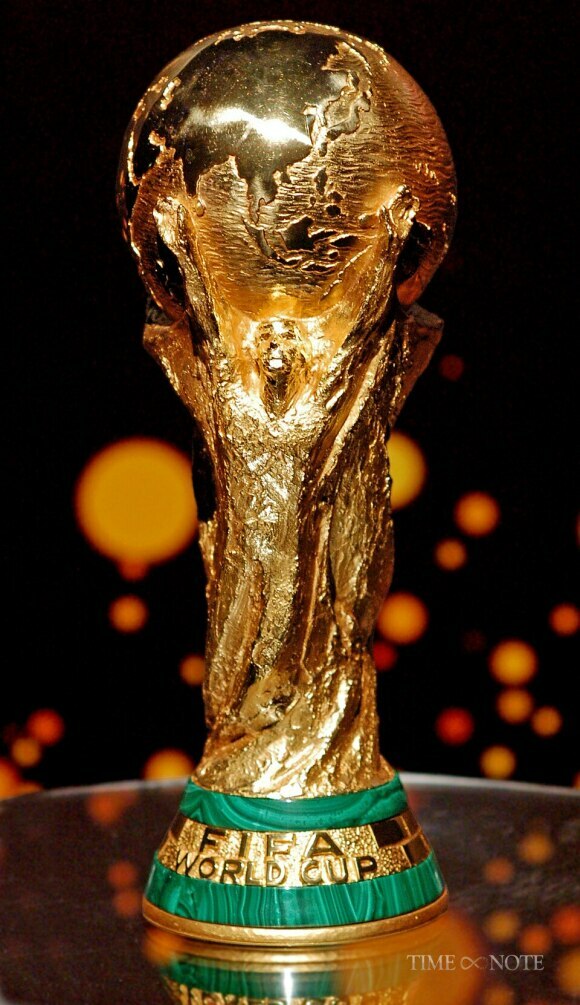
This was the 23rd edition of the FIFA World Cup for men's national football teams and the largest tournament in history.
It took place from 11 June to 19 July 2026 (39 days).
Introduced Innovations
Technology and VAR
Improved semi-automated offside technology (SAOT) — a real-time audio signal to the assistant if a player is more than 10 cm offside (faster flag raising).
3D avatars for all 1,248 players (precise body scans).
Ball sensor (Trionda ball) — 500 Hz data (500 measurements per second) for precise ball position and touches.
Expanded VAR powers — checks not only key moments, but also incorrect second yellow cards, mistaken identity, incorrect corner kicks, and more.
3D reconstruction of the goalkeeper’s line of sight (line-of-sight).
Mandatory three-minute hydration breaks in each half (at the 22nd minute) — regardless of weather conditions. Widely criticized for disrupting the flow and rhythm of the game, but positively evaluated in cases of very high air temperature.
Five-second countdown (referee’s hand) for goal kicks and throw-ins — if delayed, the opponent receives a corner kick or throw-in.
Ten-second limit for the substituted player to leave the field — otherwise the substitution is delayed.
Red card for covering the mouth during a confrontation (against racism and insults).
Players who protest and run onto the field may receive a red card; a team that collectively leaves the field forfeits the match.
For the first time, a widely announced (but completely incomprehensible) show during the half-time of the final (Madonna, Shakira, BTS, Justin Bieber, and others).
Greater protection for top teams (seeding) to avoid unnecessary early encounters.
Improved broadcasting and stadium presentation (live VAR explanations, etc.).
These innovations were aimed at faster play, reduced time-wasting, more accurate refereeing, and greater entertainment. Some of them (especially offside and VAR) caused discussions, but overall the tournament was rated as the most technologically advanced in football history.
Host Countries and Venues
For the first time, the World Cup was co-hosted by three countries: Canada, Mexico, and the United States. The dominant country was naturally the United States.
Matches were played in 16 cities and 16 stadiums:
-
United States: 11 stadiums (78 matches, including the final at MetLife Stadium / New York New Jersey Stadium, East Rutherford, New Jersey).
-
Mexico: 3 stadiums (13 matches, including the opening match at Estadio Azteca, Mexico City).
-
Canada: 2 stadiums (13 matches).
The stadiums operated almost at full capacity (average ~99.7% fill rate).
Participants and Format
48 teams (first time expanded from 32).
The tournament began with the group stage (12 groups of 4 teams).
From each group, the top 2 teams advanced, plus the 8 best third-placed teams — a total of 32 teams.
Knockout stage: Round of 32 (16 matches), Round of 16 (8 matches), quarter-finals (4), semi-finals (2), third-place match, and final.
A total of 104 matches (72 in the group stage + 32 in the knockout stage).
Winner: Spain (1–0 after extra time against Argentina in the final on 19 July at MetLife Stadium).
Third place — England.
Fourth place — France.
Some Statistics
Footballers: 48 teams × 26 players = 1,248 footballers (record; each team registered up to 26 players, including 3 goalkeepers).
Referees and officials: approximately 170 in total (52 main referees, 88 assistants, 30 video referees/VAR). Standard crew per match: 1 main referee + 2 assistants + 4th official + VAR team.
Matches: 104.
Goals scored: provisionally around 300+ (average ~2.9–3.0 goals per match; exact data is being compiled, but as of 9 July in 97 matches — 282 goals).
Yellow cards: provisionally ~260+ (average ~2.7 per match at the intermediate stage).
Red cards: provisionally ~15 (average ~0.15 per match at the intermediate stage).
Spectators in stadiums: record total attendance — more than 6.5 million (average ~65,000–65,500 per match; more precisely ~6.3–6.8 million depending on the source and date). This is definitely the highest figure in World Cup history.
The tournament set several records — the largest number of participants, the most matches, and the highest total attendance.
Official full statistical data — exact final totals of goals, cards, and attendance — are still being compiled and will be published in FIFA’s official channels after full processing.
Sources are based on FIFA and reliable sports media (data as of 20 July 2026; the most precise numbers may change slightly after the final compilation).
Main FIFA Awards
Golden Ball (best player of the tournament) — Rodri (Spain, captain and midfield leader).
Golden Boot (top scorer) — Kylian Mbappé (France, 10 goals).
Golden Glove (best goalkeeper) — Unai Simón (Spain, only 1 goal conceded throughout the tournament).
Best Young Player (best young player) — Pau Cubarsí (Spain, 18-year-old defender).
FIFA Fair Play Award (fair play prize) — Netherlands.
Additional Awards and Recognitions
Silver Ball — Lionel Messi (Argentina).
Bronze Ball — Kylian Mbappé (France).
Man of the Match in the final — Ferran Torres (Spain, author of the winning goal in extra time).
Most Notable Debutants and Surprise Players
Pau Cubarsí (Spain) — best young player, excellent defensive performance.
Erling Haaland (Norway) — stood out with goals and helped eliminate Brazil.
Cape Verde players (e.g., Sidny Lopes Cabral) — debut with a brilliant performance against Argentina.
Paraguay national team leaders (Julio Enciso, Orlando Gill) — sensational victory over Germany.
Spain dominated the individual awards, reflecting the team’s overall success. Mbappé became the first player to win the Golden Boot in two consecutive tournaments.
Top 15 most productive players of the 2026 World Cup (goals + assists)
Kylian Mbappé (France) — 10 goals + 4 assists = 14
Lionel Messi (Argentina) — 8 goals + 4 assists = 12
Erling Haaland (Norway) — 7 goals + 0 assists = 7
Jude Bellingham (England) — 7 goals + 1 assist = 8
Ousmane Dembélé (France) — 6 goals + 2 assists = 8
Harry Kane (England) — 6 goals + 2 assists = 8
Mikel Oyarzabal (Spain) — 5 goals + 1 assist = 6
Julián Quiñones (Mexico) — 4 goals + 1 assist = 5
Vinícius Júnior (Brazil) — 4 goals + 1 assist = 5
Ismaïla Sarr (Senegal) — 4 goals + 1 assist = 5
Deniz Undav (Germany) — 3 goals + 2 assists = 5
Jonathan David (Canada) — 3 goals + 0 assists = 3
Ismael Saibari (Morocco) — 3 goals + 0 assists = 3
Matheus Cunha (Brazil) — 3 goals + 0 assists = 3
Brian Brobbey (Netherlands) — 3 goals + 0 assists = 3
Top 15 teams of the 2026 World Cup by goals scored (full tournament)
Spain (champions) — 18 goals
Argentina (finalists) — 15 goals
England (3rd place) — 14 goals
France (4th place) — 13 goals
Norway — 12 goals
Brazil — 11 goals
Morocco — 10 goals
Mexico — 9 goals
Netherlands — 9 goals
Germany — 8 goals
Senegal — 8 goals
Switzerland — 7 goals
Canada — 7 goals
Portugal — 6 goals
Colombia — 6 goals
The Cape Verde team did not lose in regular time to either Spain or Argentina.
Sanctions for teams (yellow + red cards)
Leaders in yellow cards (top teams):
Egypt — 12 yellows (0 reds)
Canada — 11 yellows
Paraguay — 9–10 yellows + 1 red
Ecuador, Brazil, Colombia — 8 yellows each
England, USA, Bosnia — 7–8 each
Overall in the tournament:
Yellow cards — hundreds (average 3–4 per match).
Red cards to players — around 8–14 (some matches had several, e.g., the opening match).
Many teams received cards for time-wasting, fouls, and covering the mouth.
Red cards to coaches and staff were rare but occurred (e.g., for protests or disobeying instructions for players to leave the field).
The exact total count has not been published as a separate indicator, but some coaches received warnings or fines (including financial penalties). Overall, discipline mainly concerned the players.
Note: Cards were “reset” after the group stage and quarter-finals (a new feature in 2026). Full official data is in FIFA statistics.
Innovation — Penalty for Covering the Mouth
A player who deliberately covers their mouth (with hand, palm, sleeve, or shirt) during a confrontation with an opponent receives a direct red card and is sent off the field.
Purpose: to prevent racist, offensive, or discriminatory statements that the referee cannot hear if the mouth is covered (for example, after the incident with Prestianni and Vinícius Júnior).
Exceptions provided
If a player covers their mouth during a friendly conversation with a former teammate or in another non-conflict situation — no penalty is applied. When applying this strict penalty, the referee must be very confident that the violation is deliberate and related to a confrontation.
Several players received a red card specifically for this violation (e.g., Miguel Almirón of Paraguay).
The rule caused discussions, but FIFA supports it as a step against discrimination. Whether it has justified itself will still be studied.
On VAR Performance
An important indicator is also the goals that were not counted (disallowed goals).
VAR checks were very active throughout the tournament (more than 100 interventions in total, average ~1 per match or more). Many of them concerned goals (offside, fouls in the build-up, handball, etc.).
The exact total number has not yet been published in one official FIFA source, but there is information about dozens of disallowed goals (including in the group stage and knockout rounds).
Examples:
Several high-level cases (e.g., Jonathan Tah against Paraguay, Ronaldo’s equalizer against Croatia, Nico Williams’ goal in the final against Argentina, and others).
Up to the semi-finals alone — dozens of checks, some of which led to goal cancellations (offside and fouls dominated).
Egypt’s goal against Argentina on 7 July (Round of 16) was one of the most scandalous moments of the entire tournament: Egypt led 2:0 when, in the 60th minute, Mostafa Ziko scored a goal that would have increased the lead to 3:0, but a VAR check cancelled the goal due to an alleged foul in the build-up of the attack, which effectively broke the game — Argentina then made a comeback and won 3:2. Egypt was eliminated.
VAR made decisions more accurate, but also caused many debates about marginal and questionable decisions (fouls, simulation) and lack of consistency. Many called this championship the “VAR Cup”. Some decisions (especially against “smaller” teams) caused conspiracy theories.
Social networks reacted instantly and were filled with critical remarks about the corruption of FIFA leadership; memes and videos appeared immediately. It must be acknowledged that the most criticism was directed at Argentina, massively accusing the referees of deliberately “pulling” the game in favor of Argentina with VAR help to save the champions. After the match with Egypt, commentators ironically said that the referees “went so deep into history” — all the way to the times of the pharaohs and pyramids — to find a reason to cancel the goal. Memes with pharaohs, sphinxes, and “VAR checking hieroglyphs” spread at incredible speed.
There was constant confrontation between two outstanding players — Messi and Ronaldo, although there is no basis to claim that they are in conflict with each other.
During the tournament, the VAR innovation was positively evaluated, but at the same time, along with the mentioned controversial decisions in the Egypt–Argentina match, it caused other scandalous discussions:
Group Stage
Iran – Egypt — Shoja Khalilzadeh’s extra-time (stoppage-time) “winning” goals cancelled due to a millimeter offside. Iran missed a historic knockout stage. Commentators called it a “millimeter tragedy”.
Colombia – Portugal — Davinson Sánchez’s extra-time (stoppage-time) winning goal cancelled due to a “finger” offside. Colombia lost.
Germany – Paraguay (Round of 32, but often mentioned) — Jonathan Tah’s “winning” goal in extra time cancelled due to minimal blocking of the goalkeeper. Germany was eliminated on penalties. Many called it one of the biggest cases of “game theft”.
Portugal – Croatia — Joško Gvardiol’s “equalizer” goal in extra time (stoppage-time) cancelled according to ball sensor data (microscopic touch by a player). Croatia was eliminated.
USA – Bosnia and Herzegovina — Folarin Balogun’s red card after VAR (dangerous strike or contact with studs). The punishment was cancelled, but it caused even political reactions (including comments from US President Trump).
Messi avoiding a red card (Argentina – Algeria) — Messi’s dangerous play on the opponent’s ankle was not punished even after a VAR check.
Belgium – Senegal — Very long VAR check (118th minute) awarded a penalty to Belgium in extra time.
Final (Spain – Argentina) — Nico Williams’ goal in extra time cancelled due to insufficient — soft foul (Mikel Merino vs Otamendi).
Overall, VAR was very active in this tournament (>100 interventions), with more precise offside technology (down to centimeters), but criticism for subjective decisions (fouls, simulation) and lack of consistency. Many called this championship the “VAR Cup”.
Finally, the fixation of offside position is increasingly becoming a serious problem in the game. The introduced “Semi-automated offside technology (SAOT) + high-precision cameras and sensors allow determining position with accuracy down to 1–2 cm, sometimes even to a millimeter. A football field is 105 × 68 meters — this is a huge area. Players run at high speed, and a 1–2 cm difference is often accidental or visually imperceptible. As a result — goals are cancelled because of a “fingertip” or “shirt edge” going beyond the electronically fixed line, which in the course of the game actually changes nothing and gives no real advantage.
Examples from 2026:
Iran’s “winning” goal against Egypt — a millimeter offside.
Colombia’s extra-time (stoppage-time) goal against Portugal (finger offside).
Other cases where VAR “reached” millimeter precision, which definitely did not add fairness to the game result.
Therefore, already during the Cup, FIFA and experts, including former referees and players, started a discussion about necessary changes:
Greater tolerance (“benefit of the doubt”) — offside only when it gives a truly clear advantage (for example, 20–30 cm or more — this is the player’s body). Smaller errors should not be punished.
The principle of material advantage (“Material advantage”) — cancel the result only when the offside position really affects the game (blocks the goalkeeper, affects the ball, etc.). If he is “just next to it” but inactive — the goal should be counted.
Return to the human eye principle (“human eye”), allowing the on-field referee to evaluate, whose real-time decision is final, while VAR only checks obvious errors, not millimeter battles.
A new offside line — for example, offside “only when the entire body, not a part, is in front” (not shoulder or arm).
Currently, this is at the discussion level; no radical changes have been adopted yet, but after 2026 (with all the scandals) the discussion is very heated. Many have concluded that “the precision of technology has suppressed the human factor in the game.”
The final match was a real star parade!
A small list of celebrities and VIP persons. The list is, of course, not complete, as many were not officially confirmed, so it is based on noticed and recorded guests.
Political Leaders and Officials
Donald Trump (US President) with his wife Melania Trump (sat next to FIFA President Gianni Infantino).
The Spanish royal family: King Felipe VI, Queen Letizia, Princesses Leonor and Sofía.
Spanish Prime Minister Pedro Sánchez.
Canadian Prime Minister Mark Carney and Mexican President Claudia Sheinbaum (as representatives of the co-hosts).
Argentine President Javier Milei was invited but did not attend due to superstitious reasons.
Artists and Performers
At the closing ceremony: Tom Cruise, Post Malone, Jennifer Hudson (performed the US national anthem), Robbie Williams, Nicole Scherzinger, Laura Pausini, IShowSpeed.
A halftime show was arranged during the break (first time in a World Cup final): Madonna, Justin Bieber, Shakira (with Burna Boy), BTS, Coldplay (Chris Martin), Gustavo Dudamel.
Sports Legends and Other Athletes
Football: David Beckham, Ronaldo (Brazilian), Ronaldinho, Marcelo, Roberto Carlos, Zinedine Zidane, Didier Drogba, Youri Djorkaeff, Deco, JJ Watt.
Others: Serena Williams, Lindsey Vonn, Victor Wembanyama, Tyrese Haliburton, Draymond Green, Novak Djokovic, Ilia Malinin, Roman Reigns (WWE).
Hollywood, Music, and Influencers
Beyoncé + Jay-Z
Timothée Chalamet + Kylie Jenner
Matt Damon (with wife Luciana Barroso)
Javier Bardem
Adrien Brody, Will Ferrell, Trevor Noah, Kevin Hart, Spike Lee
Dua Lipa (with Callum Turner), Rihanna + A$AP Rocky, Pharrell Williams, Mick Jagger, and others.
Other Notable Guests
Odell Beckham Jr., Jaxson Dart (NY Giants), Karl-Anthony Towns, Jalen Brunson (Knicks), and other athletes.
Winnie Harlow, Julia Garner, and other models/artists.
The final was definitely one of the most “star-studded” sporting events in recent times.
Weather Conditions — Highest Recorded Indicators
Weather conditions are definitely worth mentioning when talking about the 2026 championship. The highest temperatures were recorded in:
Monterrey (Mexico) and Miami (USA) — the hottest stadiums most often. The temperature during matches often exceeded 34–38 °C, with a heat index (sensation) up to 40–43+ °C (humidity + sun).
Philadelphia (France–Paraguay) — one of the hottest matches (~38–39 °C, heat index >41 °C).
Dallas, Houston, and Atlanta — also often above 35 °C (but some stadiums had roofs and air conditioning).
Throughout the tournament, several matches took place at temperatures above 32–35 °C, making it one of the hottest World Cups in history (similar to 1994 in the USA).
The tournament was held in the middle of summer in North America, so the heat was expected, and indeed — some matches were particularly difficult. That is why FIFA introduced mandatory three-minute hydration breaks in each half (at the 22nd minute) in all matches.
In some matches (especially daytime), players and fans suffered from severe heat.
The heat record at field level in some cases exceeded 40 °C (the grass temperature was even higher).
Ticket Prices — a circumstance by which the 2026 championship also entered history
Ticket prices for the 2026 World Cup — among the highest in history — dynamic pricing + secondary market.
Official prices (face value) (FIFA)
Final (MetLife Stadium):
Cheapest category — from ~2,030 dollars.
Average (Category 2–3) — 4,210–5,785 dollars.
Highest (Category 1) — up to 10,990 dollars (record).
Premium/hospitality — up to 32,970+ dollars.
Other stages (on average):
Group stage — from 60 dollars (cheapest) to 2,000+ dollars.
Round of 16 and quarter-finals — 275–3,000+ dollars.
Semi-finals — 420–3,295+ dollars.
Secondary market (resale)
Final — average 11,000–16,000 dollars, maximum up to 33,000–38,000+ dollars (sometimes even 100,000+ dollars for the best seats).
Group stage — from 300–600 dollars to several thousand for popular matches.
Records and Facts
The most expensive final in history (6–7 times more expensive than in 2022).
The cheapest official ticket of the tournament — 60 dollars (supporter entry for some group stage matches).
The most expensive tickets — hospitality packages up to tens of thousands of dollars.
Demand was enormous (more than 500 million applications), so market prices rose sharply.
Prices depended heavily on the teams, stadium, and market (dynamic pricing). Matches in the USA and Mexico were more expensive than in Canada.
Map
Sources: timenote.info, grokipedia.com
Persons
| Name | ||
|---|---|---|
| 1 |  | Jayden Adams |
Places
| Name | |||||
|---|---|---|---|---|---|
| 1 |  | MetLife Stadium | lv |