
Elizabeth Robinson
 Elizabeth Robinson
- Geburt:
- 23.08.1911
- Tot:
- 18.05.1999
- Mädchenname:
- Elizabeth R. Schwartz
- Zusätzliche namen:
- Бетти Робинсон
- Kategorien:
- , Athleten, Held einer ganzen Nation
- Nationalitäten:
- amerikaner
- Friedhof:
- Geben Sie den Friedhof
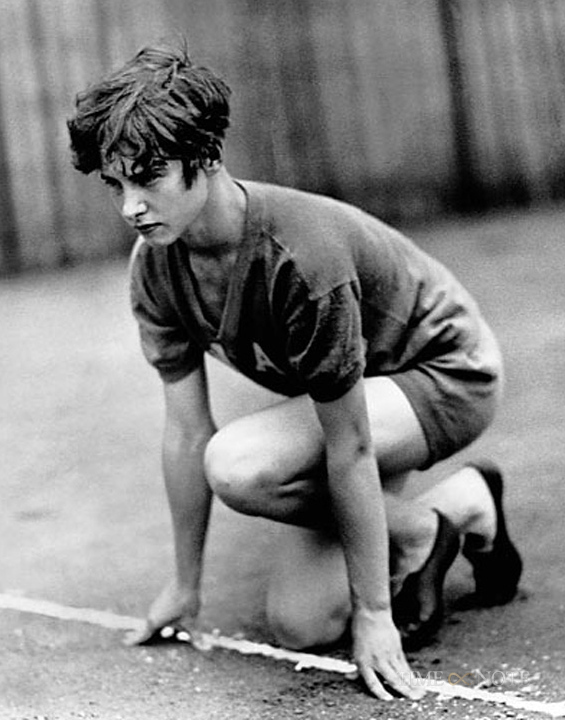
Elizabeth R. Schwartz (née Robinson; August 23, 1911 – May 18, 1999) was an American athlete and winner of the first Olympic 100 metres for women.
Early life
Robinson was born in Riverdale, Illinois. She was a student at Thornton Township High School when she achieved national acclaim as an Olympic champion.
Her talent was discovered by her science teacher Charles Price, who saw her running to catch the train after school. He was a former athlete and the coach of the school team.
Athletics
Robinson ran her first official race on March 30, 1928, at the age of 16, at an indoor meet where she finished second to Helen Filkey, the US record holder at 100 m, in the 60-yard dash. At her next race on June 2, outdoors at 100 meters, she beat Filkey and equalled the world record, though her time was not recognized because it was deemed wind-aided.
At the 1928 Amsterdam Olympics, her third 100 m competition, Robinson was the only female US athlete to qualify for the 100 m final. She reached the final and won, equaling the world record of 12.2 seconds. She was the inaugural Olympic champion in the event, since athletics for women had not been on the program before, and its inclusion was in fact still heavily disputed among officials. She remains the youngest athlete to win Olympic 100 m gold. With the American 4 x 100 metres relay team, Robinson added a silver medal to her record.
Six decades later, Robinson was interviewed for a book, Tales of Glory: An Oral History of the Summer Olympic Games Told By America's Gold Medal Winners, by Lewis H. Carlson and John J Fogarty. This is how she remembered the 100 m race:
I can remember breaking the tape, but I wasn't sure that I'd won. It was so close. But my friends in the stands jumped over the railing and came down and put their arms around me, and then I knew I'd won. Then, when they raised the flag, I cried.
Chicago Tribune reporter William L Shirer wrote that 'an unheralded, pretty, blue-eyed blonde young woman from Chicago became the darling of the spectators when she flew down the cinder path, her golden locks flying, to win'.
She joined Northwestern University where she decided to pursue a physical education degree, hoping to become a coach at the 1936 Olympics. Robinson joined the rifle team at Northwestern in addition to running track there. She was also a member of Kappa Kappa Gamma.
On 28 June 1931, Robinson was involved in a plane crash and was severely injured. Initial reports had her being discovered unconscious in the wreckage and wrongly thought dead by her rescuer; in fact, he merely thought she was beyond saving. He took her to Oak Forest infirmary, locally known as the "Poor Farm", because he knew the undertaker. Doctors determined she had suffered severe multiple injuries] and she would never race again. It was another six months before she could get out of a wheelchair, and two years before she could walk normally again. Meanwhile, she missed the 1932 Summer Olympics in her home country.
Still unable to kneel for a normal 100 m start due to the fractures and surgeries on her left leg, Robinson was a part of the US team of 4 × 100 metres relay at the 1936 Summer Olympics. The US team was running behind the heavily favored Germans, but the Germans dropped their baton. Robinson took the lead and handed off the baton to Helen Stephens, resulting in her second Olympic gold medal.
After athletic career
Retiring after the Berlin Olympics, Robinson remained involved in athletics as an official. She worked in a hardware store for many years. In 1977, she was inducted into the USA National Track and Field Hall of Fame. In 1996, she carried the Olympic Torch for the Atlanta Olympic Games.
Personal life
She married and had two children. The family resided in Glencoe, Illinois, a suburb on Chicago's North Shore.
She died at age 87, suffering from cancer and Alzheimer's disease.
********************
The woman who ran faster than death itself. They buried her alive at 19. Eight years later, she stood on a podium and proved death wrong. Chicago, 1928. A high school teacher watches a teenage girl sprint for a departing train. She's so fast, he literally times her the next day with a stopwatch. "Betty," he says, "you need to compete." She'd never raced. Didn't even know girls could run track. Four months later, Betty Robinson became the youngest woman to ever win Olympic gold in the 100 meters. She was 16 years old. Chicago threw her a parade. 20,000 people lined the streets. Diamond rings. Newspaper headlines. America's golden girl. Then came the plane crash. June 28, 1931. The engine died mid-flight. Betty's plane dropped into a marshy field outside Chicago. When rescuers found her, she wasn't breathing. Broken leg in three places. Shattered arm. Eight-inch gash across her skull. They put her in a car trunk and drove to the funeral home. The undertaker noticed something. A breath. Barely there, but enough. Betty woke up seven weeks later to devastating news: You'll never run again. Metal pins. Uneven legs. Wheelchair. Two years just to walk. She watched the 1932 Olympics from home, knowing she should've been there defending her title. Most athletes would've quit. Betty Robinson started crawling. Then walking. Then jogging. There was one problem: her knee couldn't bend enough for a sprinter's crouch. But relay runners start standing up. By 1936, against every medical prediction, she made the U.S. Olympic team for Berlin. Getting there nearly bankrupted her family. The Depression had taken everything. Medical bills piled up. The women's team wasn't funded. She sold her medals, her ribbons, everything—except the gold from 1928. She worked as a secretary, saved every cent, and barely scraped together enough. In Berlin, in the 4x100 relay final, Germany was dominating. World record pace. Then, in one heartbeat, Germany's anchor dropped the baton. It bounced on the track. America's Helen Stephens blazed past. Gold medal. Betty Robinson—declared dead five years earlier—stood on an Olympic podium for the second time. Her daughter said it best: "The first medal was easier. The second one, she had to work her tail off for." Betty retired at 24. She kept both medals in a candy box in her closet. Never displayed them. Rarely talked about it. In 1996, at 84 years old, she carried the Olympic torch for Atlanta. Frail but fierce. Refused help from anyone. She died in 1999, having done what almost no one in history has done. Betty Robinson didn't just survive. She didn't just recover. She came back from death itself—and won. That's not a comeback. That's a resurrection.Ursache: wikipedia.org
Keine Orte

Keine Termine gesetzt